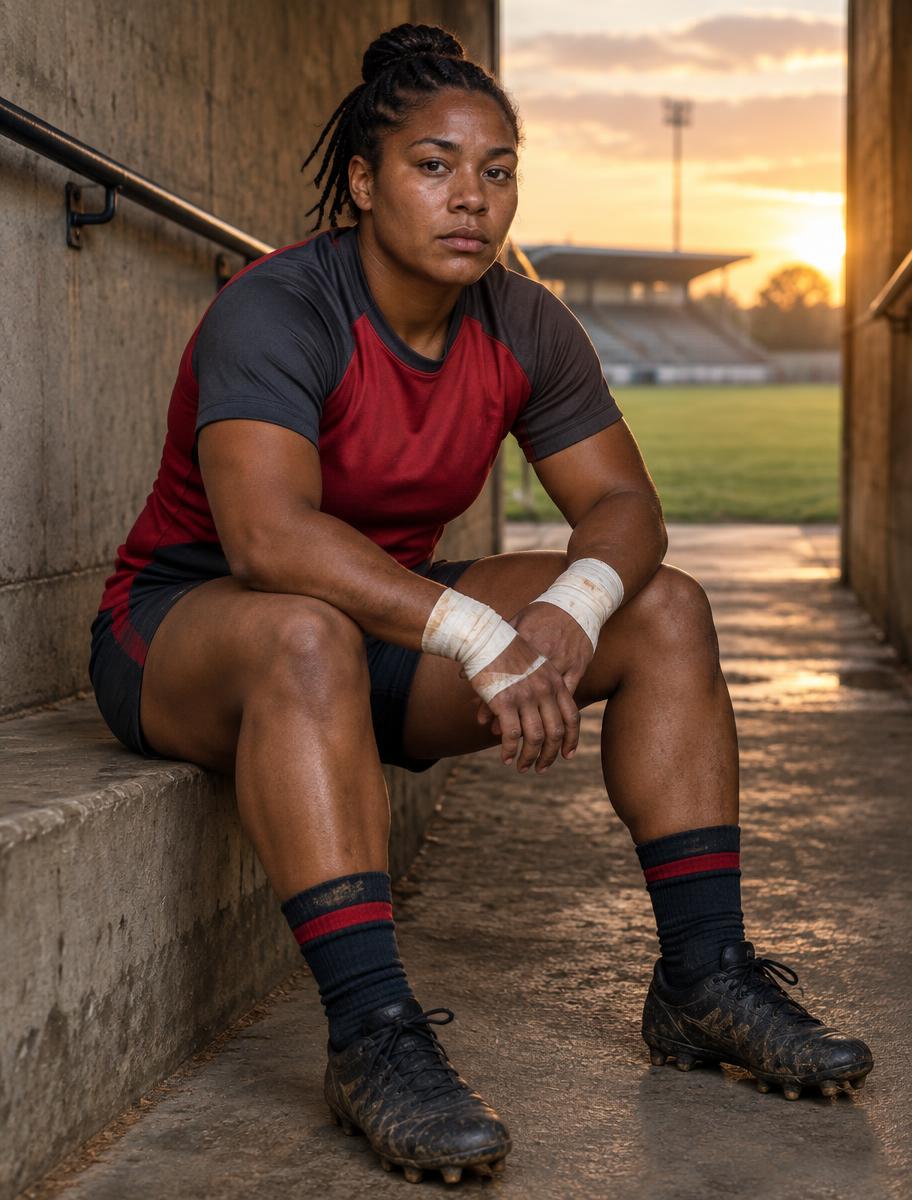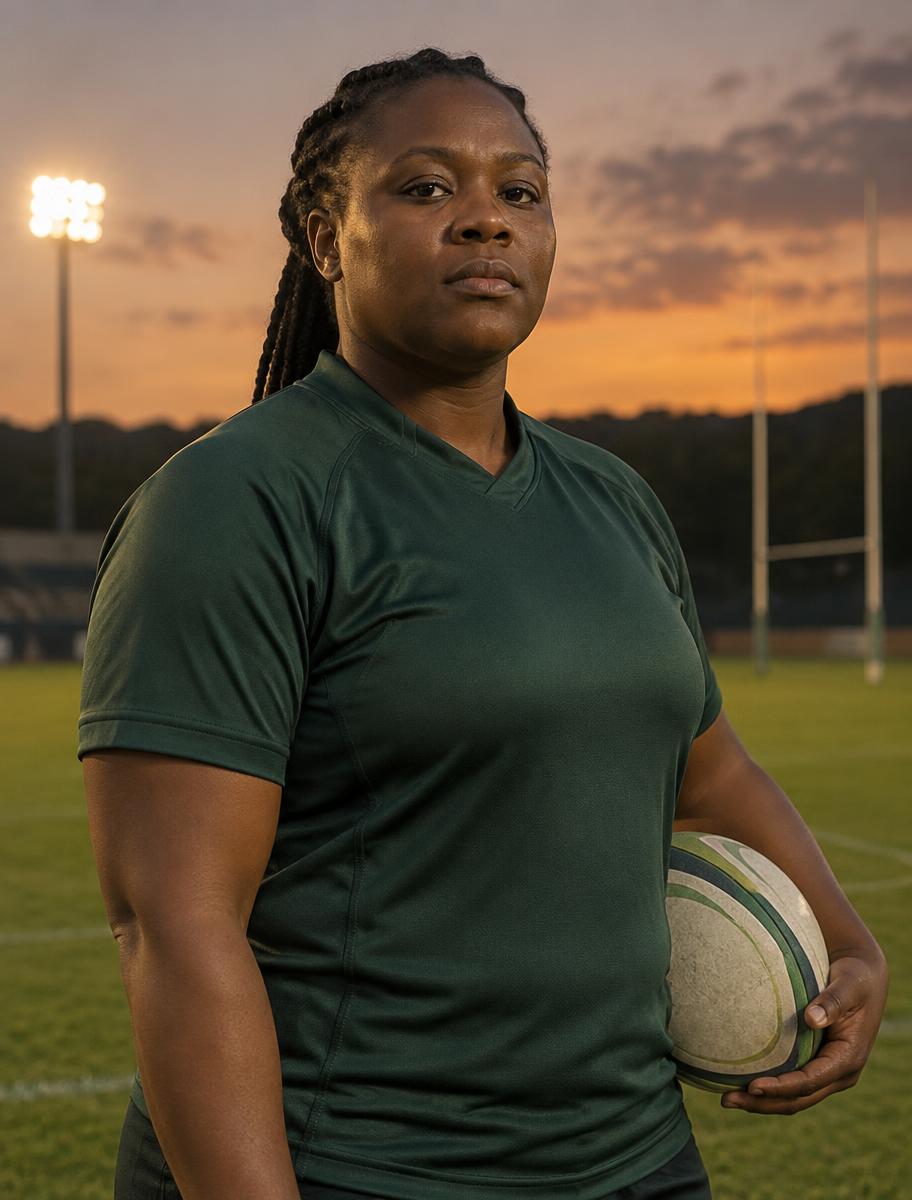
Babalwa Latsha is one of the most experienced players in South African women’s rugby. From starting the sport in Khayelitsha to becoming the first African women’s rugby player to turn professional and captain of the Springbok Women, her career has helped shape the modern game in South Africa.
From Khayelitsha to the Springbok Women
Latsha was born in Khayelitsha, Cape Town, and started playing rugby almost by accident. In 2014, two women approached her and invited her to join their team. She accepted out of curiosity, but soon developed a passion for the sport and decided to take rugby seriously.
Her progress was rapid. Latsha made her Test debut for South Africa against Wales in Cardiff in November 2018. By 2026, she had become one of the squad’s most experienced players and an established leader.
Her career also included a major milestone for African women’s rugby. In January 2020, Latsha became the first African women’s rugby player to turn professional when she joined Spanish club Eibar Rugby Taldea.
She scored 13 tries in seven games for Eibar and had her contract renewed. She later had a second spell playing club rugby abroad, joining Allianz Premiership club Harlequins Women in 2023.
A specialist in the front row
Latsha plays at prop, with tighthead prop being her specialist position. Her strength in the scrum has become one of the defining features of her game.
In July 2026, she earned her 41st Test cap and was described by SA Rugby as the most-capped Springbok Women tighthead prop. That experience has made her an important part of South Africa’s forward pack.
Latsha has also become known for her memorable attitude towards the set piece. Her personal philosophy can be summed up in a phrase used on her SA Rugby profile: “salads don’t win scrums.”
However, her game is not limited to scrummaging. During the 2022 Rugby World Cup, Latsha was selected in the Team of the Weekend after playing a full 80-minute match against France. She was the only South African included in that selection.
Her international career has also included an unusual experience for a prop: Latsha represented South Africa at the Rugby World Cup Sevens and scored a try.
Leadership on and off the field
Latsha had already gained leadership experience before becoming the Springbok Women’s captain for the 2026 season.
She captained South Africa against Namibia during the 2022 Rugby Africa Women’s Cup and also led the team against Spain later that year. She had previously captained the Springbok Women during their European tour in 2018.
For many years, Nolusindiso Booi was one of the central leadership figures in the team. Booi retired after the 2025 season, ending a Test career that had lasted almost two decades.
Latsha brought considerable international experience and previous captaincy experience when she took over the leadership role in 2026.
Her first match as the 2026 season captain was a 34–21 victory over the USA at Ellis Park in July. Later that year, she led South Africa against New Zealand at FNB Stadium in the first Test between the two teams played on South African soil.
Experience abroad
Latsha’s professional career has given her experience beyond South Africa’s domestic system.
Her move to Eibar in 2020 made her a pioneer for African women’s rugby. At the time, professional opportunities for women’s rugby players from the continent were extremely limited.
Her later spell with Harlequins Women gave her another opportunity to compete in a professional European environment. These experiences exposed her to different coaching methods, playing styles and approaches to the development of women’s rugby.
In 2026, Latsha returned to DHL Western Province, representing the union in the Women’s Super League 1.
Education alongside rugby
Latsha has also combined her sporting career with higher education. She graduated from the University of the Western Cape with an LLB degree in 2019.
Balancing university and international rugby was not always easy. During tours, she has taken textbooks with her and prepared for examinations alongside training and matches.
Her academic background has also influenced the way she talks about the development of women’s rugby. Latsha has advocated for greater investment at grassroots level and for more opportunities for women to participate in leadership and decision-making within the sport.
A role in the growth of women’s rugby
Latsha’s importance to South African rugby extends beyond her performances on the field.
She entered the game through the South African Rugby Legends Association’s VUKA development programme in 2014. That programme helped introduce her to rugby and became the starting point for an international career that eventually took her to professional rugby in Europe.
Her story illustrates the importance of development programmes and accessible pathways into the sport. A player does not necessarily have to follow a single route from school rugby through provincial teams and into the Springbok Women. Development programmes, provincial competitions, Sevens, age-group teams and international alignment camps can all contribute to a player’s progress.
Latsha has also used her position to speak about the wider development of women’s rugby, particularly the need to strengthen the grassroots game and create opportunities for women both on and off the field.
Leading the Springbok Women in 2026
South Africa reached the quarter-finals of the 2025 Women’s Rugby World Cup for the first time in the team’s history. Latsha was part of that historic campaign and entered the following season as captain.
In 2026, she led the Springbok Women through a series of important Tests, including matches against the USA and New Zealand. South Africa’s first home Test against New Zealand at FNB Stadium was another significant moment for the team.
The Springbok Women are now moving into a new World Cup cycle under co-head coaches Laurian Johannes-Haupt and Franzel September. Latsha’s experience at tighthead prop and her history of international and professional rugby make her an important figure during this period of development.
A pioneer still playing
Babalwa Latsha’s career combines several milestones in South African women’s rugby.
She began playing through a development programme in Khayelitsha, became a Springbok, turned into the first African women’s rugby player to play professionally, competed overseas, represented South Africa in both 15-a-side and Sevens rugby, completed a law degree and eventually became captain of the national team.
As of September 2026, Latsha remains a Springbok Women player and captain while also representing DHL Western Province domestically.
Her career shows how quickly women’s rugby in South Africa has developed — and how individual players can become part of that development while still competing at the highest level.
Sources
- SA Rugby — Babalwa Latsha player profile
SA Rugby — Latsha named Springbok Women captain for 2026
World Rugby — Babalwa Latsha: the first African women’s player to go professional
University of the Western Cape — Babalwa Latsha’s journey from student to professional rugby player
SA Rugby — Latsha returns to DHL Western Province
SA Rugby — Latsha’s 41st Test cap and 2026 captaincy
SA Rugby — Springbok Women face New Zealand at FNB Stadium
SA Rugby — Latsha named in Rugby World Cup Team of the Weekend
SA Rugby — Latsha joins Harlequins Women
SA Rugby — Nolusindiso Booi retires after 2025 season