A style built around physicality
If there is one word that best describes the traditional identity of the Springbok Women, it is physicality.
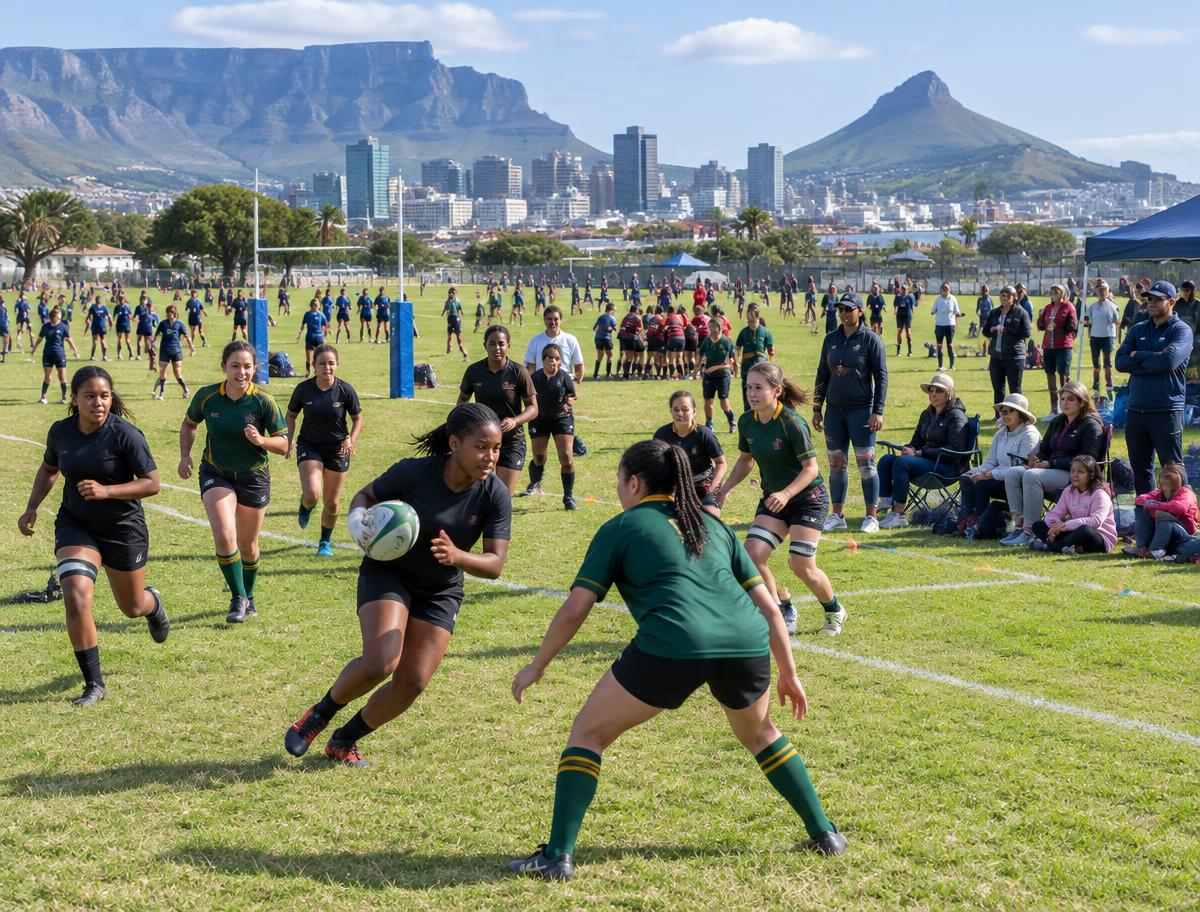
South Africa have traditionally relied heavily on the strength of their forwards, their scrum and their ability to generate momentum through physical carries. The approach is built around winning collisions, carrying hard and putting sustained pressure on the opposition defence.
That identity remains firmly in place in 2026.
Before the Rugby Africa Women’s Cup final in May, the Springbok Women spoke about sticking to their established “DNA” rather than abandoning the qualities that had brought them success. The team went on to win the tournament and claim a fifth consecutive African title.
The same characteristics were visible during the team’s Test series against Fiji in August. South Africa’s forwards laid the foundation for a 55-12 victory in Suva, with the pack providing the platform for a nine-try performance.
For opponents, that creates a difficult challenge. South Africa want to make the game physical and put sustained pressure on defenders. If the Bok pack can generate quick ball after contact, the backs receive more opportunities to attack.
The scrum is a major weapon
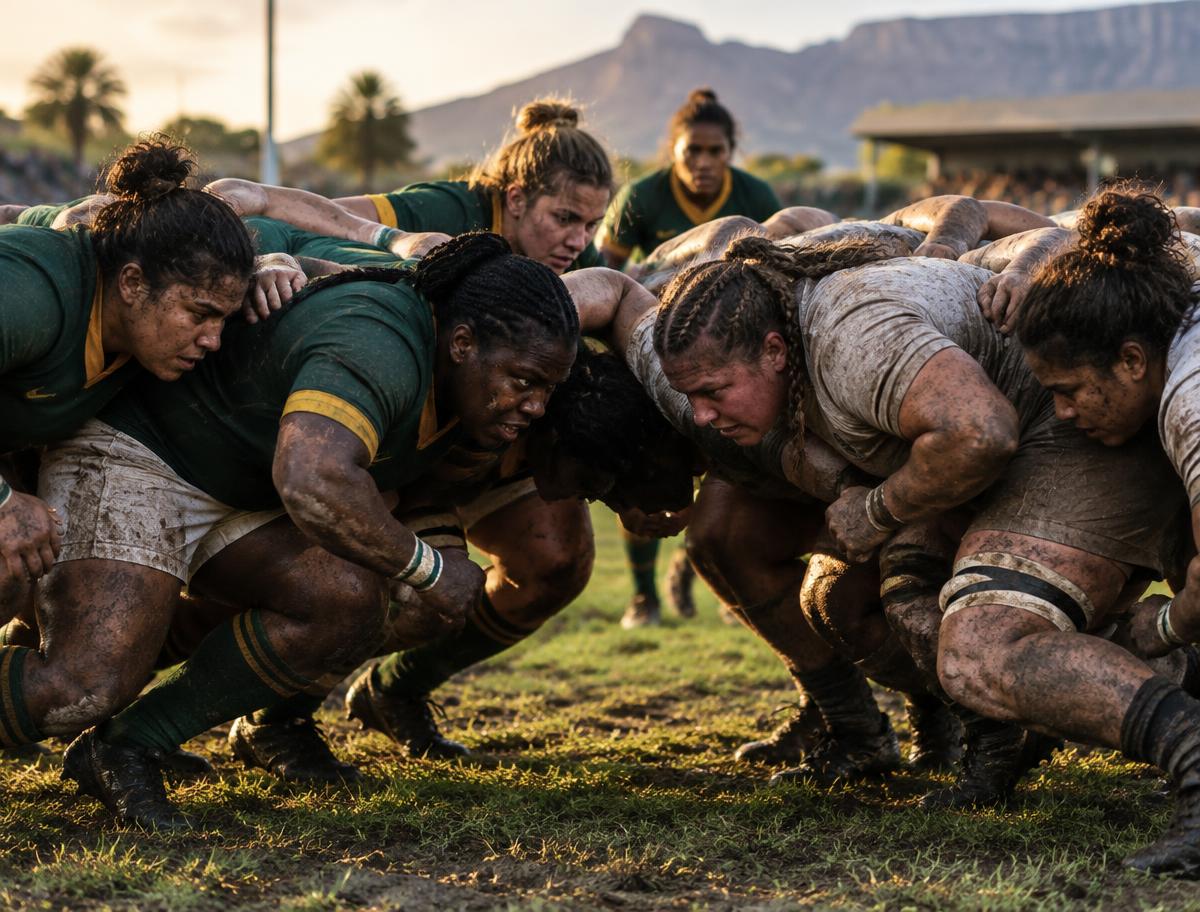
The scrum is one of the clearest expressions of the Springbok Women’s identity.
The front row is not simply there to restart play. A dominant scrum can win penalties, put pressure on the opposition pack and provide South Africa with valuable attacking possession.
The importance of the set piece was particularly evident after the team’s September 2026 Test against New Zealand. Co-head coach Laurian Johannes-Haupt said the Springbok Women had established their credibility through their scrumming and forward play, while also stressing how much pride the team takes in its scrum.
This helps explain why the forwards remain so important to South Africa’s tactical approach. A strong scrum gives the team a reliable way to create pressure even when open-field opportunities are limited.
Winning through the forwards
The Springbok Women’s forward pack does more than provide set-piece strength.
Ball carriers are expected to make hard metres and put pressure on the defensive line. Strong carries can force defenders to commit to the breakdown and central channels, potentially creating opportunities elsewhere on the field.
This was one of the reasons South Africa were able to dominate significant periods of their 34-21 victory over the USA in July. The first half at Ellis Park was particularly impressive: the Springbok Women led 29-0 at the break, with then-head coach Swys de Bruin calling it the best 40 minutes of rugby since he took charge.
The same principle was visible against Fiji. South Africa’s pack dominated the contest and created the platform for the team to score nine tries.
For a beginner watching the Springbok Women, the forwards are therefore one of the easiest places to start when trying to understand the team’s game plan.
Defence is part of the identity too
Physicality is not limited to attacking play.
The Springbok Women also want to make life difficult for opponents through aggressive defence and strong contact. When the defensive line is organised, South Africa can use their physical strength to stop attackers behind the gain line and regain possession.
However, defence has also been an area where the team has shown room for improvement in 2026.
During the Rugby Africa Women’s Cup, assistant coach Franzel September acknowledged that a slow start against Uganda was partly caused by defensive problems before South Africa recovered to win the match.
That is an important part of understanding the current Springbok Women. Their identity is not a finished product. The coaching staff is trying to preserve the team’s physical strengths while making the overall performance more consistent.
South Africa are adding more skill to the formula
The most interesting development in the Springbok Women’s style during 2026 has been the effort to expand beyond a purely physical game.
Before the September Test against New Zealand, Springbok Women forward Catha Jacobs said that the team takes pride in its physicality but is also working to improve its skills in other areas. She explained that the team would not move away from its strengths while adding greater variety to its play.
The idea is not to replace the traditional South African approach. Instead, the goal is to make the team harder for opponents to predict after the initial physical battle.
If South Africa can combine dominant carries and a strong set piece with cleaner handling, better decision-making and more effective attacking movement, the opposition has to defend more possibilities.
The four tries scored against New Zealand on 5 September offered some evidence of that attacking development, even though the Black Ferns ultimately won 52-20. South Africa were able to hold sway for significant periods against the world’s second-ranked team, while the coaching staff identified both progress and areas that still need work.
The role of the backs
The backs play an important role in turning the pressure created by the forwards into attacking opportunities.
The scrum-half controls the tempo and connects the forwards with the wider attack. The fly-half is particularly important because she must decide whether South Africa should continue attacking through the middle, move the ball towards the edges or use the kicking game.
Outside backs then provide speed and finishing ability.
For South Africa, the ideal sequence is not necessarily to immediately throw the ball wide. The forwards can first put pressure on the defence and draw defenders towards the breakdown and central channels. Once defenders are committed, the backs can exploit space elsewhere.
That makes the relationship between the forwards and backs one of the most important aspects of the Springbok Women’s attack.
Key positions to watch
For a new supporter, several positions are especially useful to watch.
Props and hookers: Watch the scrum and short-range carries. Their work is central to South Africa’s physical identity.
Locks: They are central to the lineout and contribute power in the scrum, as well as carrying and defensive work.
Loose forwards: They combine physical carries, tackling, breakdown work and support play. They are often among the busiest players on the field.
Scrum-half: She controls the speed of the attack and decides how quickly the ball moves away from the breakdown.
Fly-half: She is one of the team’s main decision-makers, choosing between carrying, passing and kicking and helping determine where the next phase will be played.
Outside backs: They provide width, speed and finishing ability once the forwards and inside backs have created space.
Watching these positions makes it easier to see how the Springbok Women try to build pressure rather than simply looking for individual moments of brilliance.
A style that is still evolving
The Springbok Women of 2026 are best understood as a team in transition rather than one with a completely fixed tactical identity.
The foundation remains familiar: physical forwards, a powerful scrum, aggressive carrying and a willingness to make the game a battle at close quarters.
But the coaching staff increasingly wants more from the team. South Africa are working on their skills, attacking options and consistency so that physical dominance becomes a platform for a more complete game.
That evolution is particularly important because South Africa’s biggest challenge is no longer simply dominating African opposition. The Springbok Women have established themselves as Africa’s leading women’s fifteen-a-side team. Their next objective is to close the gap on the world’s strongest sides.
The 52-20 defeat to New Zealand showed that there is still work to do. But the four tries scored by South Africa, combined with the team’s strong forward performances and the progress seen earlier in the season, also showed why the coaching staff remains confident in the direction of the programme.
For now, the best way to describe the Springbok Women’s style is simple: power first, but with an increasingly varied game developing around it.
Sources
- SA Rugby — Springbok Women to stick to DNA in Africa Cup final, 30 May
- 2026.
SA Rugby — Jacobs believes improved skills will be key for Black Ferns clash, 1 September 2026.
SA Rugby — De Bruin pleased with win, but not second half effort, 4 July 2026.
SA Rugby — Springbok Women pack dominant in Suva victory, 7 August 2026.
SA Rugby — Lessons learned and boxes ticked for Springbok Women, 27 May 2026.
SA Rugby — Springbok Women only focused on ‘next job’, 6 July 2026.
SA Rugby — Springbok Women well-prepared for Black Ferns challenge, 4 September 2026.
SA Rugby — Positives for Springbok Women despite defeat to Black Ferns, 5 September 2026.