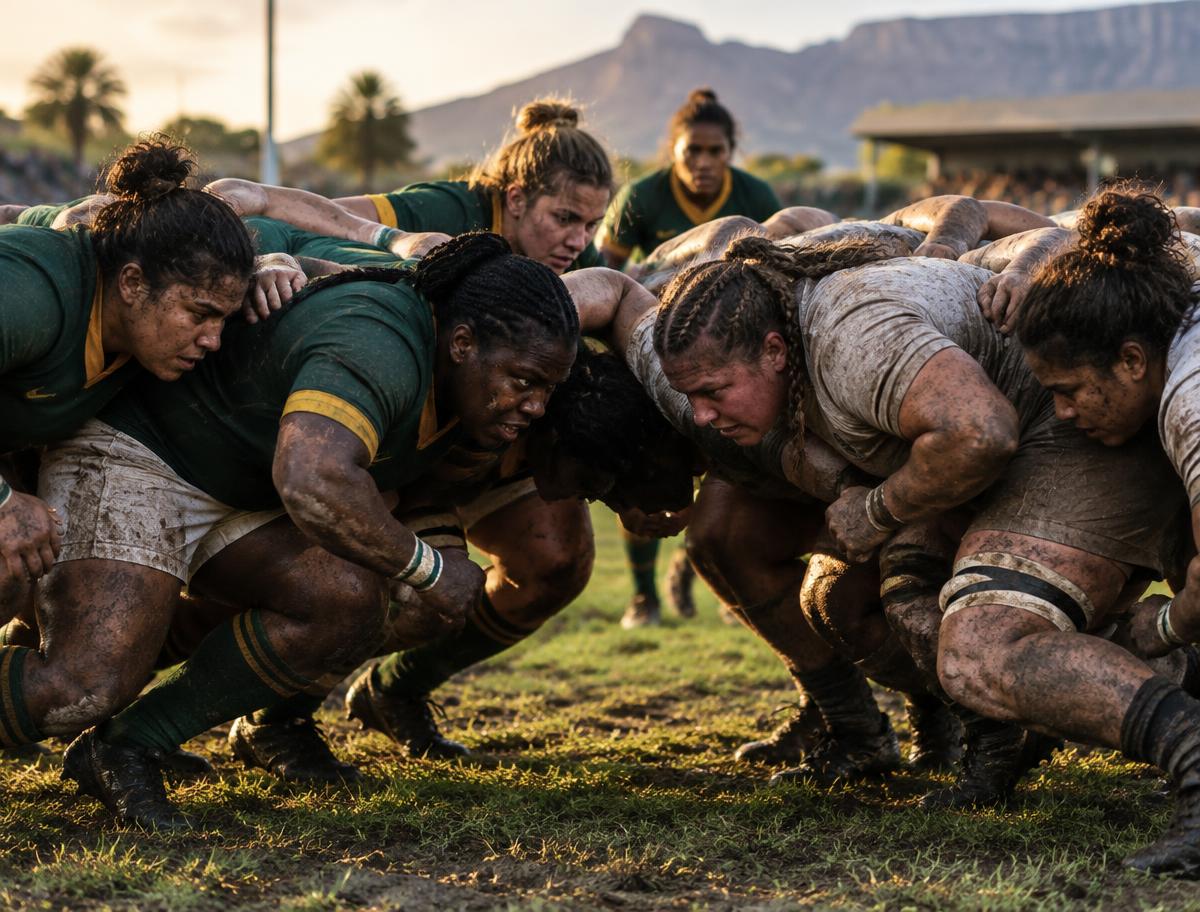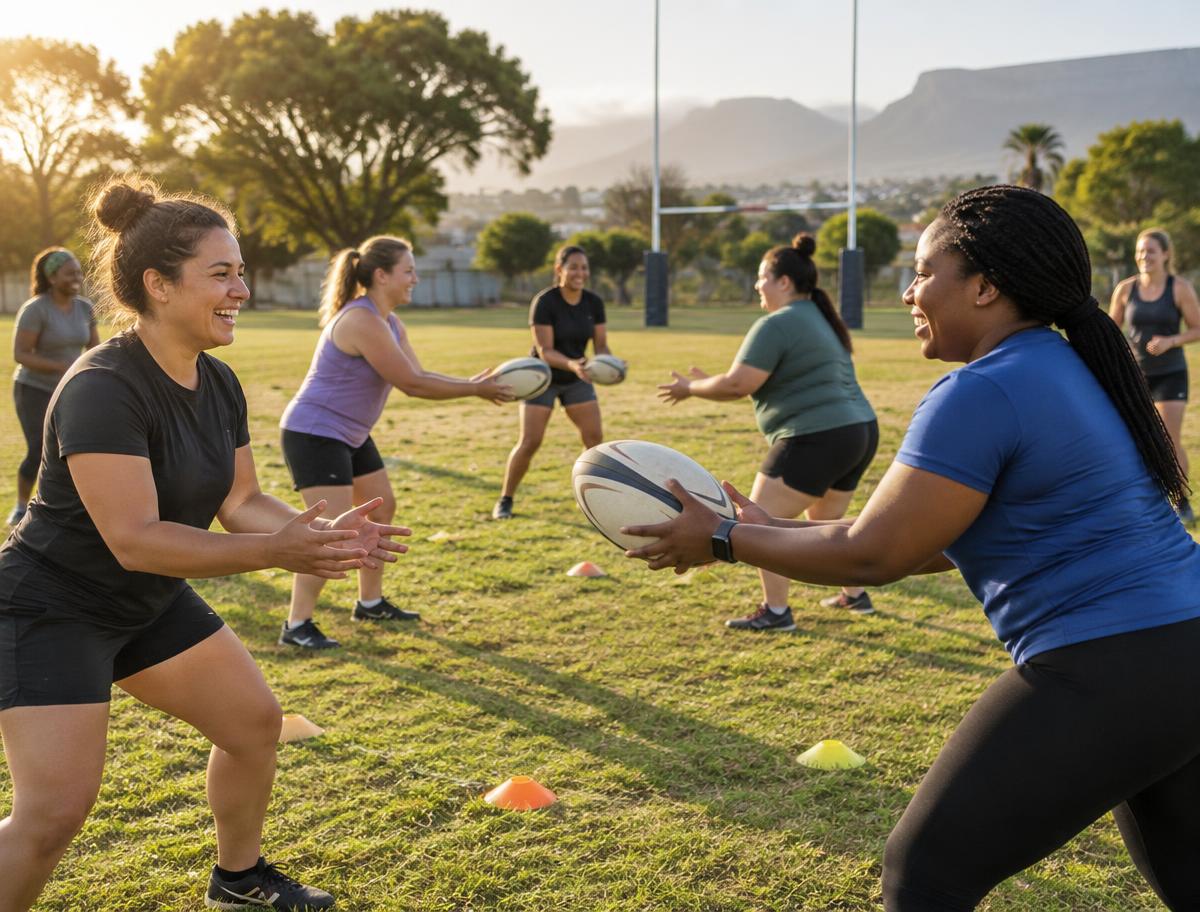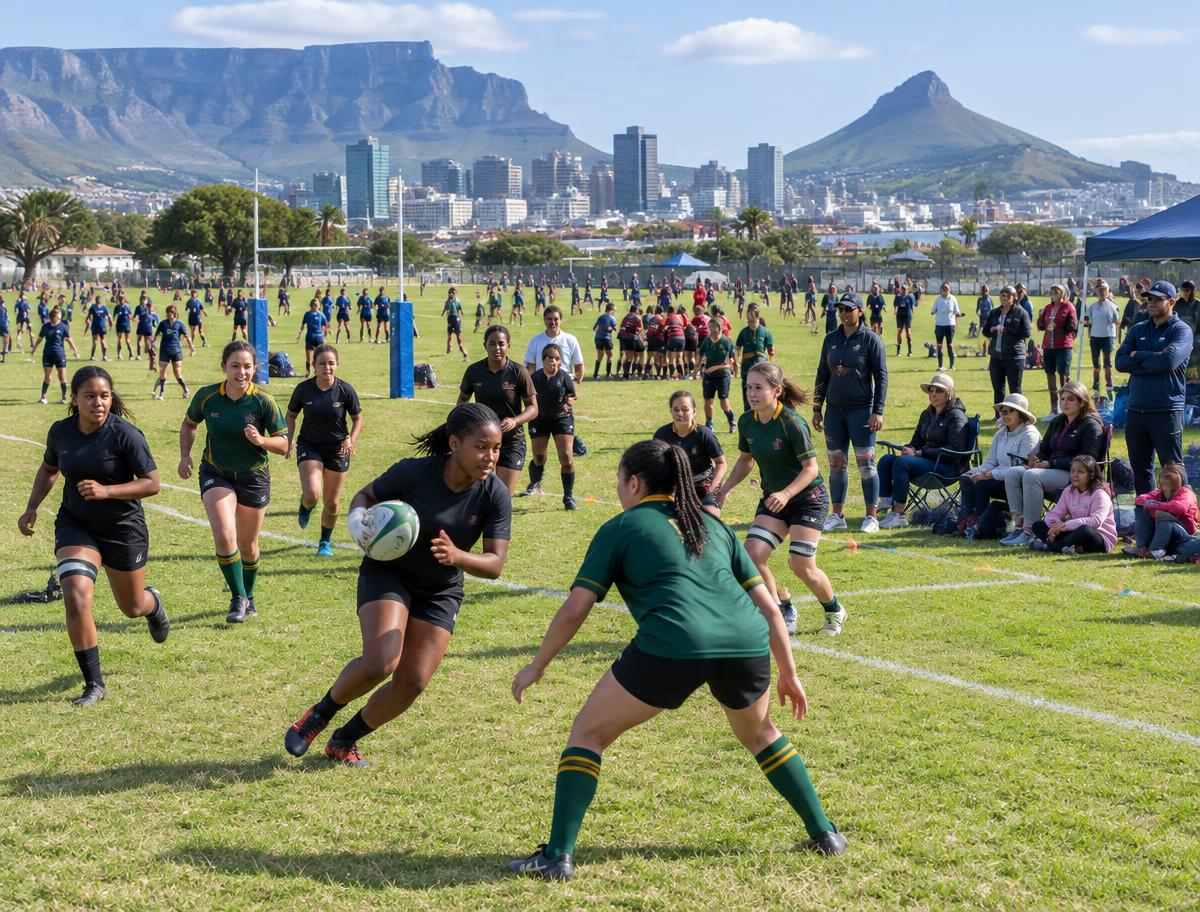
It is still a work in progress. In 2025, SA Rugby reported that women made up 6.5% of the country’s registered playing population. The organisation also set a target of increasing female participation by 30% by the end of 2027 as part of its wider development strategy.
From the Springbok Women to a wider system
The Springbok Women first played an international Test in 2004 and made their Rugby World Cup debut in 2006. Since then, the team has become an established part of South Africa’s international rugby programme.
One of the clearest recent milestones came at the 2025 Women’s Rugby World Cup in England. South Africa reached the quarter-finals for the first time, giving the team its best-ever result at the tournament. They eventually lost 46–17 to New Zealand in Exeter.
The Springbok Women also remain one of the leading teams in African rugby. They won the Rugby Africa Women’s Cup in 2025, extending their run of continental titles, and continued competing regularly against teams from outside Africa as their international programme expanded.
The national Sevens programme has provided another route into international rugby. Players such as Nadine Roos have moved between Sevens and 15-a-side rugby, showing that the two formats can form complementary parts of a player’s development.
The national structure has also expanded beyond the two senior teams. SA Rugby’s competition framework includes the Springbok Women, SA Women A, Springbok Women’s Sevens, Junior Springbok Women, Women’s Super League teams and age-group programmes.
Provincial rugby is becoming more structured
Domestic competition is one of the most important parts of the growth story.
South Africa has traditionally organised women’s provincial rugby through competitions below the international level. In recent seasons, those competitions have become more structured and increasingly connected to high-performance rugby.
In 2026, the senior domestic structure included the Pick n Pay Women’s Super League 1 and Super League 2. Super League 1 featured eight provincial teams, while Super League 2 provided another national-level competition for developing programmes.
The Isuzu Bulls Daisies have been particularly important to this development. In April 2026, they defeated the Sanlam Boland Dames 36–15 to win the Super League 1 title for the fourth consecutive year.
The Daisies’ rise also illustrates how professional environments can change the pathway for players. The team became South Africa’s first professional women’s rugby side, giving its players the opportunity to focus on rugby as a full-time occupation.
That model has created a different development environment from the one available to players who still have to combine provincial rugby with full-time employment.
Building the pathway from schools upwards
The development of women’s rugby increasingly begins before players reach senior provincial teams.
SA Rugby has identified schools as one of the important foundations for the long-term growth of the women’s game. Its development programmes include the FNB U16 and U18 Girls’ Weeks, Elite Player Development camps and other age-group initiatives designed to give girls more opportunities to play representative rugby.
In 2025, SA Rugby announced the first international matches for a South African U18 Girls team. A group of 53 players from 34 high schools and 12 provincial unions attended an Elite Player Development camp before the squad was reduced to 26 players for two matches against the Netherlands.
SA Rugby described the project as part of a developing pathway between age-group rugby and senior women’s rugby. The organisation also planned further opportunities at U19 and Junior Springbok Women level, with the aim of giving players more consistent international experience before they reach senior rugby.
The same approach can be seen at younger age groups. FNB U16 and U18 Girls’ Weeks give provincial unions opportunities to identify players, while Elite Player Development camps bring talented players into contact with higher-performance structures.
At grassroots level, the Get Into Rugby programme has also played an important role. SA Rugby reported in 2025 that GIR accounted for 80% of the girls in its system. The organisation also highlighted programmes such as VUKA and Iqhawe Week as ways of expanding access to rugby in underrepresented communities, smaller schools and rural areas.
The aim is not simply to produce more elite players. It is also to give more girls an opportunity to enter rugby and remain in the sport as they move from school towards higher levels of competition.
More routes into high-performance rugby
The pathway is also becoming less linear.
A player does not necessarily have to move through one fixed sequence from school rugby to a provincial team and then directly into the Springbok Women. Different programmes can connect at different stages.
A promising player may progress through provincial age-group rugby, Sevens, university rugby or an Elite Player Development programme. Others may reach senior rugby through a provincial team before entering a national alignment camp or an SA Women A squad.
This wider network is reflected in SA Rugby’s official competition structure, which places SA Women A, Springbok Women’s Sevens, Junior Springbok Women, Women’s Super League teams and provincial age-group teams alongside the Springbok Women.
The development of these different levels gives players more opportunities to continue playing while coaches have more opportunities to identify talent.
More opportunities beyond playing
The expansion of women’s rugby is not limited to the number of players on the field.
Coaching, refereeing, team management, performance analysis, medical support, administration and other areas of the sport are also becoming part of a broader development system for women.
World Rugby’s Women in Rugby Careers Programme, for example, was created to help women develop careers across the rugby ecosystem. Its areas include coaching, officiating, team management, governance, performance analysis, medical and player welfare, as well as commercial and operational roles.
This reflects a wider change in the sport: developing women’s rugby means creating an ecosystem around the players as well as opportunities for players themselves.
SA Rugby has also highlighted the development of female coaches and match officials as part of its wider strategy. At the 2025 Community Rugby Workshop, the organisation specifically linked women’s rugby development with opportunities for female players and coaches.
Professional rugby changes the picture
Professionalisation is another important part of the development story.
The Bulls Daisies became the first professional women’s rugby team in South Africa, providing a full-time environment for players. Their success has demonstrated what can happen when a provincial women’s team has access to professional structures and resources.
The impact goes beyond the Daisies themselves.
Professional teams can provide players with more time for strength and conditioning, tactical preparation, recovery and analysis. They can also create an environment where young players see rugby as a possible long-term career rather than something they have to fit around another job.
At the same time, professional opportunities remain limited. The majority of South African women’s players still develop in provincial, club, school or semi-professional environments.
That makes the continued expansion of domestic competitions important: a stronger base gives more players opportunities to gain the experience needed to reach professional and international rugby.
What comes next?
There are clear signs of progress, but the numbers also show why further development is needed.
Women still represented only 6.5% of South Africa’s registered playing population in the 2025 data presented by SA Rugby. The organisation has therefore identified increasing female participation, strengthening schools and youth pathways and expanding opportunities for women as important development priorities.
The challenge is not simply to produce more Springbok Women.
The longer-term goal is a connected system in which girls can enter rugby at school or grassroots level, progress through age-group and provincial competitions, access high-performance programmes and, for the strongest players, reach the Springbok Women or Springbok Women’s Sevens.
At the same time, the system needs to create opportunities for players who do not reach international level. A healthy women’s rugby structure also requires domestic competitions, clubs, coaches, referees, administrators and other people who can keep the game growing at every level.
South Africa’s recent international results have increased the visibility of what that system can produce. The first U18 international matches, the expansion of age-group development programmes, the growth of the Women’s Super Leagues and the emergence of professional rugby all represent different parts of the same broader development process.
For South African women’s rugby, growth is increasingly about building the system that makes international success possible — and ensuring that more girls have a chance to become part of that system.
Sources
- SA Rugby — Springbok Women official team page.
SA Rugby — SA Rugby charts bold path for inclusive growth and development, 28 May 2025.
SA Rugby — Ground-breaking internationals for U18 Girls, 24 November 2025.
SA Rugby — Northern and Cape teams continue to impress at FNB Girls Weeks, 2 July 2025.
SA Rugby — 2026 Pick n Pay Women’s Super League final.
SA Rugby — Women’s First Division competition records.
SA Rugby — General Competition Rules: South African women’s rugby competition structure.
SA Rugby — Black Ferns end brave effort by Bok Women at RWC, 13 September 2025.
World Rugby — Women in Rugby Careers Programme.
World Rugby — A Blueprint for Growth: Women’s Rugby.