Start by finding a local team
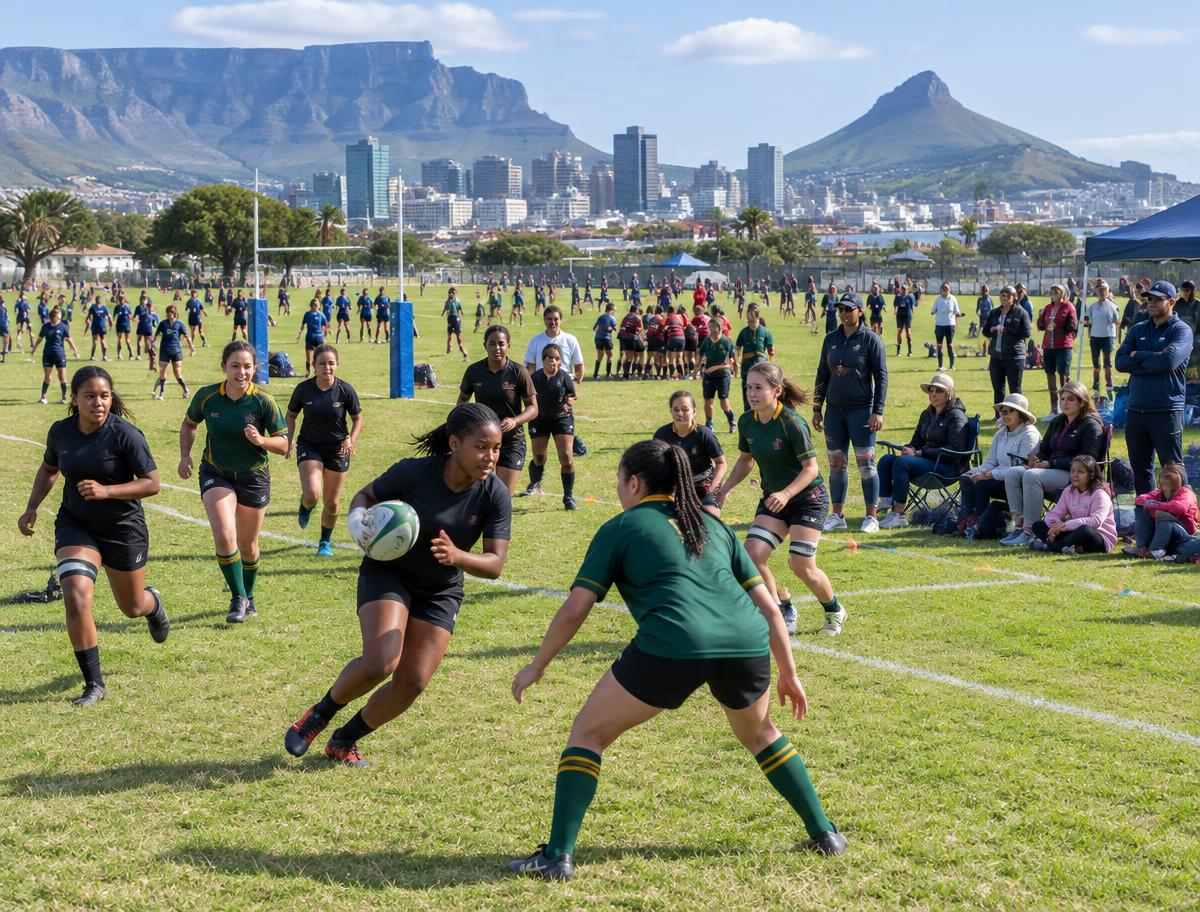
For most adult beginners, the simplest starting point is a rugby club in your area.
World Rugby recommends starting with your nearest rugby club when you want to get involved. It also advises contacting your national union, which can provide information about clubs in your country.
In South Africa, rugby is organised through provincial unions, which oversee clubs and competitions in their regions.
When contacting a club, do not worry if you have never played before. Ask specifically whether the club has a women’s team and whether it accepts beginners. It is also worth asking:
- When are women’s training sessions?
Does the team train all year or only during the competition season?
Are complete beginners welcome?
Is there a development, social or non-contact group?
What equipment should you bring?
Are there registration or membership fees?
Social media can also be useful for finding local teams, as many clubs use their own pages to announce training sessions and recruitment.
For girls who are still at school, the first place to look may be their school or a local youth programme rather than a senior club.
Choose the format that suits you
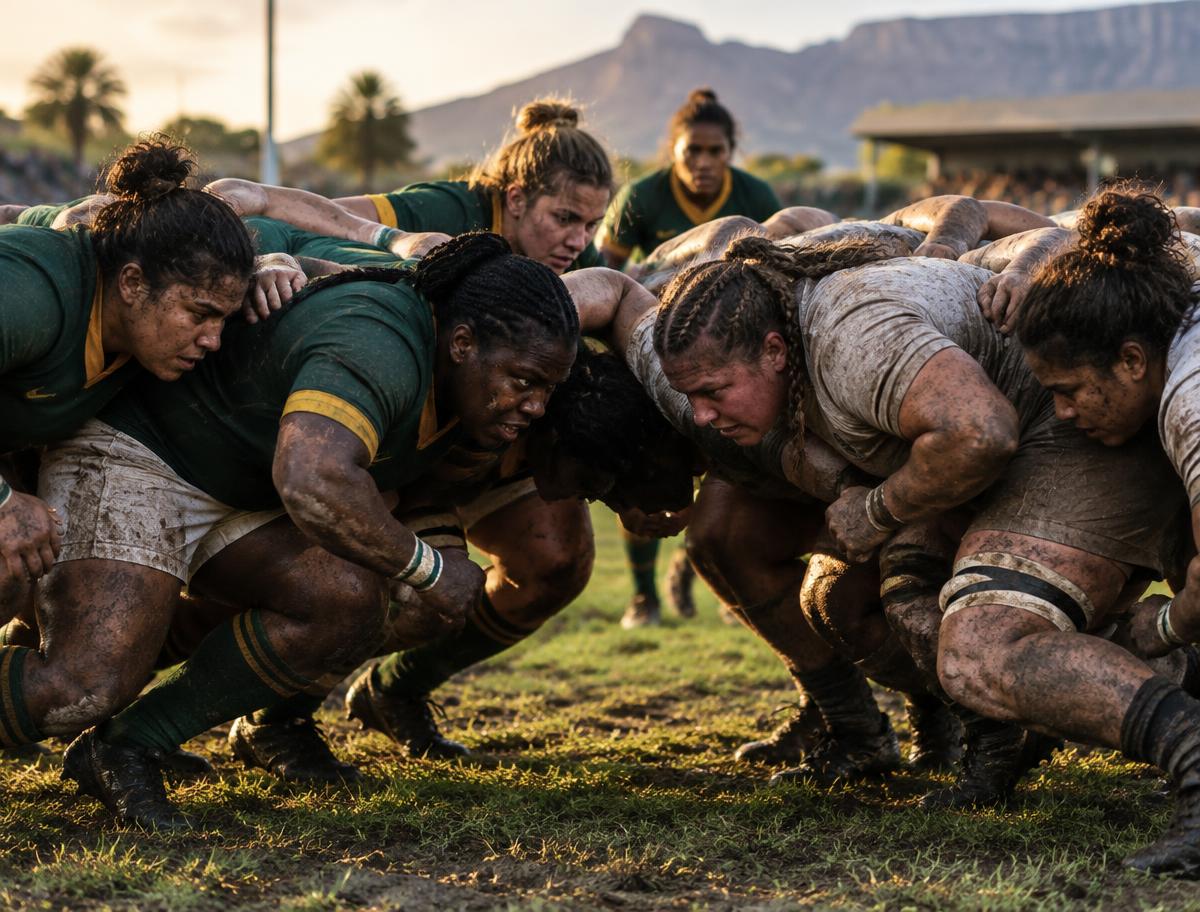
The most familiar form of rugby is 15-a-side rugby, or 15s. Each team has 15 players, with eight forwards and seven backs. It is the format used by the Springbok Women and the main senior provincial competitions in South Africa.
There is also rugby sevens, where teams have seven players. The basic skills are similar, but there is considerably more space for each player and the game is played at a faster pace. South Africa has a separate Springbok Women’s Sevens programme, giving players another route into international rugby.
You may also encounter modified forms such as Tag, Touch, Tip, Flag or Beach rugby. These versions change the normal laws of rugby and are designed to introduce players to skills such as running, handling, evasion and support play. World Rugby describes modified rugby as an accessible introduction to the sport, with some versions removing physical contact altogether.
For someone nervous about contact, a modified format can therefore be a useful way to learn basic rugby skills first. However, availability varies between clubs and programmes.
You do not need to arrive match-ready
A common misconception is that you need to be strong, fast or exceptionally fit before joining a rugby team.
You do not need to be in peak condition before your first session.
At the same time, rugby is a physically demanding sport, particularly in contact formats. World Rugby's Rugby Ready programme emphasises preparation, safe technique and appropriate physical conditioning for participation.
A beginner’s first sessions will normally focus on learning the basic skills and movements of the game. Depending on the programme, you may work on running, passing, catching, evasion and gradually learn contact skills.
You also do not need to know your position before you start. Rugby has positions suited to different physical and technical attributes, and players can discover where they fit as they gain experience.
Your coach can help determine whether you are more comfortable as a forward, back or eventually in a more specialised position.
What to bring to your first training session
You do not need a complete rugby kit on day one.
The most important item for outdoor rugby is a suitable pair of rugby boots with appropriate studs or cleats. World Rugby recommends sturdy boots that provide sufficient grip for the playing surface.
For a first training session, you will generally also want:
- comfortable sports clothing;
socks;
water;
boots suitable for the pitch;
a mouthguard if contact work is planned;
weather-appropriate clothing.
A mouthguard is particularly worth getting once you start contact rugby. World Rugby recommends players wear one to help protect the teeth and jaw.
Some players also use World Rugby-approved headgear or padded equipment. These are optional protective items and do not replace learning safe tackling and contact techniques.
Before buying anything expensive, ask the club what it actually requires. Some teams may have spare balls, training equipment or other items available for new players.
What happens at training?
A typical beginner session will combine physical preparation with rugby skills.
You may start with a warm-up and movement exercises before working on passing, catching, running lines and ball handling. As you progress, training can introduce contact skills, rucks, tackling, set pieces and tactical exercises.
Do not worry if the terminology sounds confusing at first. Rugby has a lot of rules, but you will learn them progressively by training and playing.
World Rugby's Beginner’s Guide covers the basic laws and techniques, including passing, tackling, rucks, mauls, scrums and lineouts.
Safety should be part of the learning process from the beginning. World Rugby’s Rugby Ready programme is specifically designed to help players, coaches and officials understand preparation and safe participation in the sport.
If you are completely new to contact rugby, tell your coach. That allows the coach to introduce contact skills progressively rather than assuming you already know how to tackle or participate in a ruck.
There is a pathway beyond your first club
Joining a local team does not mean you have to stay at recreational level.
South Africa has a developing network connecting grassroots rugby, schools, provincial teams, high-performance programmes and national teams. SA Rugby’s development system includes girls’ U16 and U18 programmes, while initiatives such as Get Into Rugby, VUKA and Iqhawe Week are used to expand access to the sport. SA Rugby has also reported that Get Into Rugby accounts for 80% of all girls in its participation system.
At senior level, the Women’s Super League 1 and Super League 2 provide national provincial competition.
There are also additional development routes, including age-group representative rugby, national alignment camps and programmes such as SA Women A and Junior Springbok Women.
This does not mean that every player has to follow a fixed ladder from school rugby to a provincial team and then to the Springbok Women. Different players can enter the system through different programmes and move between formats or levels as opportunities arise.
The Springbok Women and Springbok Women’s Sevens are the national teams at the highest international level, but there are many levels of rugby below them where players can compete, develop and simply enjoy the sport.
You can start without knowing your position
One of the most common concerns for a beginner is not knowing where they belong on the field.
That is completely normal.
You do not need to arrive at your first training session knowing the difference between a prop and a wing. Coaches can introduce players to different positions as they learn the game.
Rugby also offers roles for different body types and skill sets. Some players enjoy the physical work of the forwards, while others prefer the speed and space available to backs.
Sevens provides a different experience again, because every player has to contribute across a large area of the pitch.
Your first priority should therefore be learning the basic skills and discovering which parts of the game you enjoy.
The first step is simply turning up
You do not need to know every rule, have the perfect physique or own a full set of rugby equipment before you start.
Find a local women’s team, contact the coach and explain that you are new to rugby. Ask whether you can attend a training session and what you should bring.
If you are nervous about contact, ask whether the club has a non-contact or beginner-friendly session. If you are still at school, ask your school or local rugby union about girls’ programmes.
The first few sessions may feel unfamiliar. You will probably make mistakes, forget rules and discover muscles you did not know you had. That is normal.
Every experienced player started somewhere.
In South Africa, the growing women’s rugby system is creating more opportunities for girls and women to enter the sport, develop their skills and decide how far they want to take their rugby.
The first step is usually the simplest one: find a team and turn up.
Sources
- World Rugby — Beginner’s Guide: Finding a Club.
World Rugby — Beginner’s Guide: Equipment.
World Rugby — Beginner’s Guide: Modified Rugby.
World Rugby — Beginner’s Guide: Safety as a Top Priority.
World Rugby — Rugby Ready.
SA Rugby — SA Rugby charts bold path for inclusive growth and development, 28 May 2025.
SA Rugby — 2024 Annual Report.