Where do future Springbok Women come from?
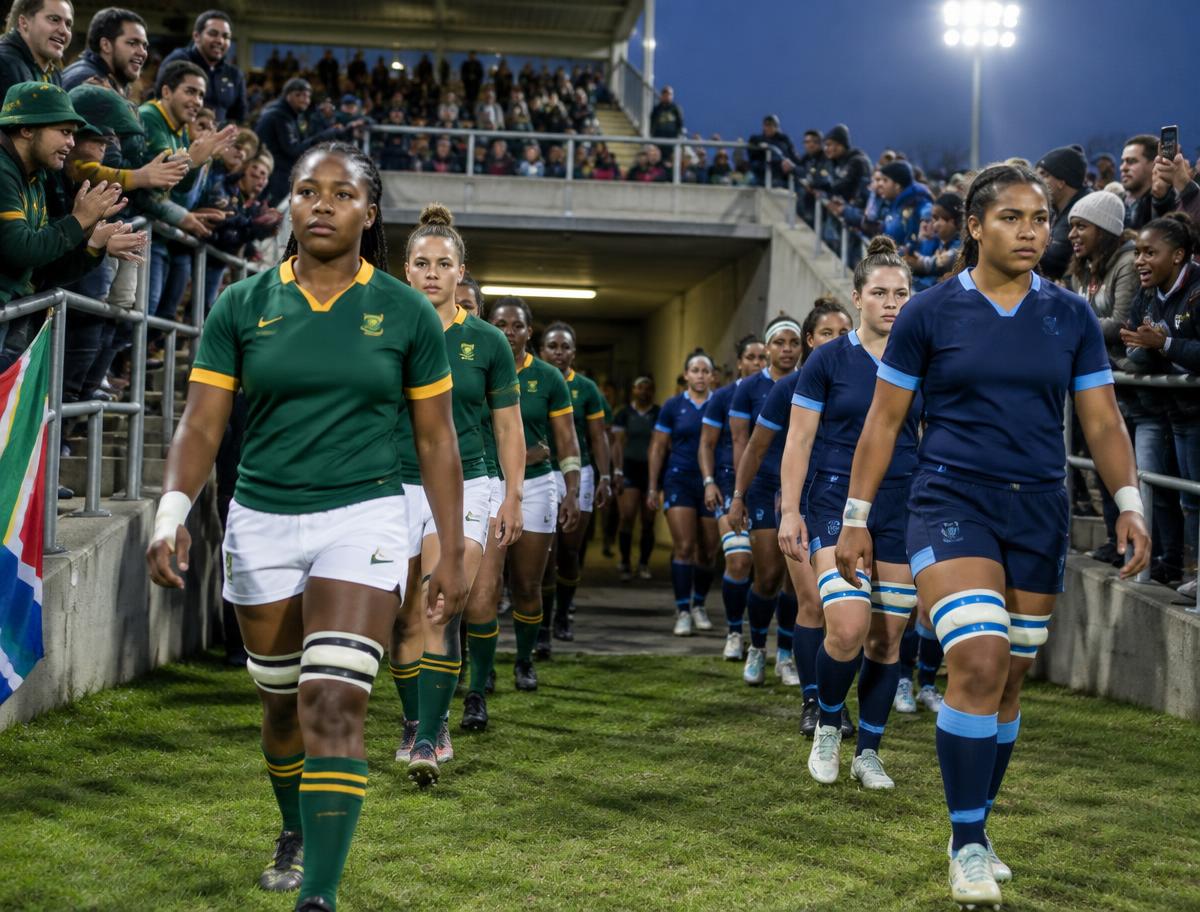
The Springbok Women are the highest level of women’s 15-a-side rugby in South Africa, but the national team depends on a much wider system beneath it.
For many players, international rugby is the result of years of development through schools, clubs, universities, provincial teams and age-group programmes. Domestic competitions are particularly important because they provide something that training alone cannot: regular matches against strong opposition.
South Africa has been working to make this pathway more connected. In 2026, the country’s senior provincial game was organised around the Pick n Pay Women’s Super League 1 and Super League 2, while SA Rugby continued to develop U18 and U20 programmes and national alignment camps.
The aim is not to create one mandatory route to the Springbok Women. Players can develop in different environments. Instead, the system gives coaches more opportunities to identify talent and gives players more chances to prove that they are ready for the next level.
Provincial rugby provides regular competition
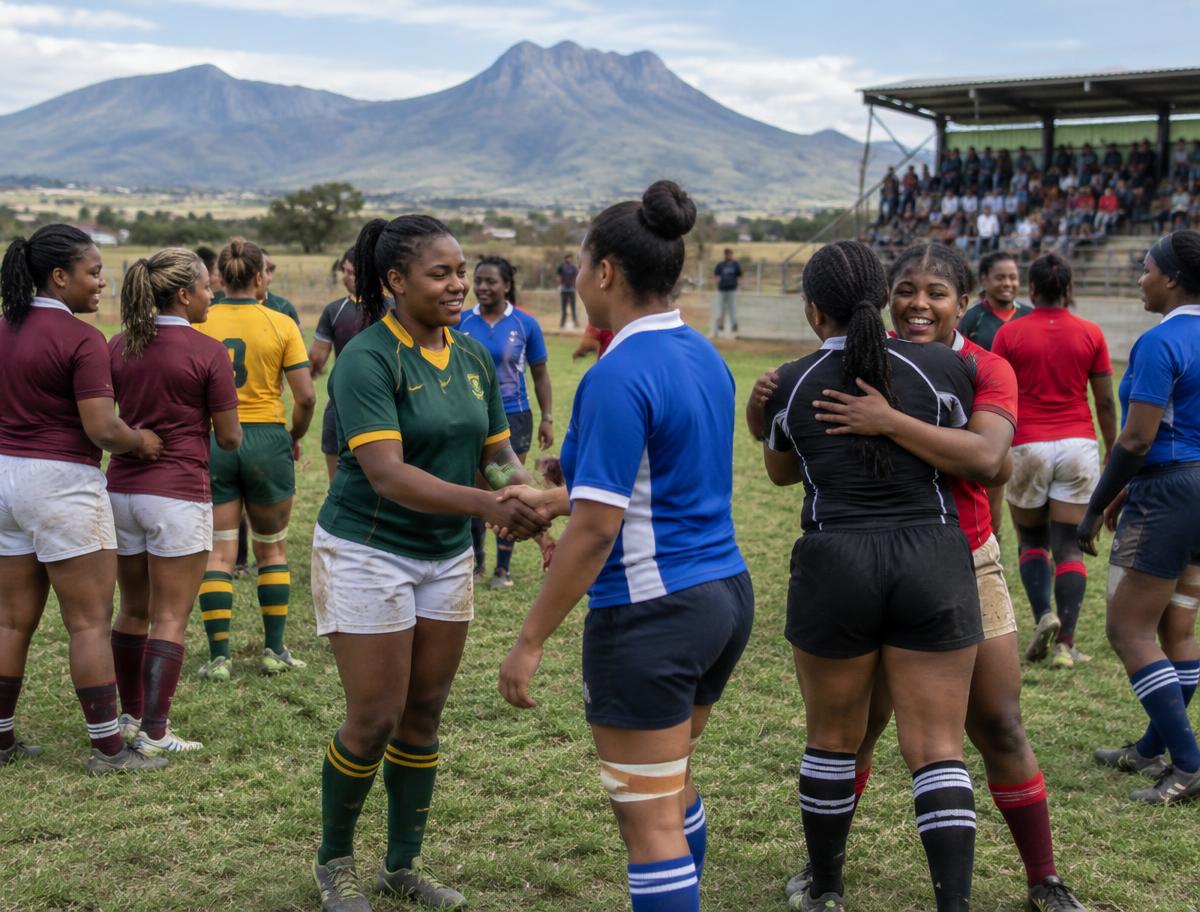
The most important part of the senior domestic pathway is provincial rugby.
In 2026, eight teams competed in Women’s Super League 1, the top provincial competition. They included the Isuzu Bulls Daisies, Sanlam Boland Dames, Border Ladies, EP Queens, Free State Women, Golden Lions Women, Sharks Women and DHL Western Province.
The competition used a single round-robin format, with the top two teams advancing to the championship final.
For developing players, that regular competition is crucial.
A promising athlete might look impressive in a training environment, but selectors need to know whether she can make good decisions under pressure, perform consistently and cope with physically demanding matches.
Provincial rugby provides that test.
It also exposes players to different styles and opponents. A forward can learn to deal with stronger packs, while a back can develop her decision-making against organised defensive systems. Over a provincial season, coaches can see much more than they would from one isolated performance.
The top provincial teams raise the standard
High-performing provincial programmes can also provide a demanding environment for player development.
The Isuzu Bulls Daisies are the clearest example. The Pretoria-based team won the 2026 Super League 1 title for the fourth consecutive year, defeating the Sanlam Boland Dames 36-15 in the final.
Success at that level creates competition for places and requires players to perform consistently.
It also benefits the wider national system. After the 2026 Super League 1 season, then-Springbok Women head coach Swys de Bruin said the competition gave the national coaching staff valuable insight and helped them identify new talent.
This relationship is important. The provincial competition does not simply exist alongside the national programme. It is one of the environments in which national coaches can evaluate players who may eventually become Springboks.
Super League 2 gives more players a chance
The development pathway would be much narrower if only the strongest provincial teams had a national competition.
That is why Women’s Super League 2 also matters.
The second-tier competition gives provinces outside the top division a national-level platform. In 2026, teams such as the Hollywood Foundation Pumas Women, AVBOB Griquas Women, Griffons Women, Leopards Women, Limpopo Blue Bulls Women, SWD Eagirls and Valke Women competed in the league.
For a developing player, Super League 2 can be an important opportunity to establish herself in senior rugby.
Not every talented teenager will immediately be ready for the highest provincial level. A second-tier competition gives players another environment in which to develop physically and tactically while still playing meaningful competitive rugby.
That expands the pool from which national selectors can eventually choose.
Age-group rugby starts the process earlier
The pathway begins before players reach senior provincial rugby.
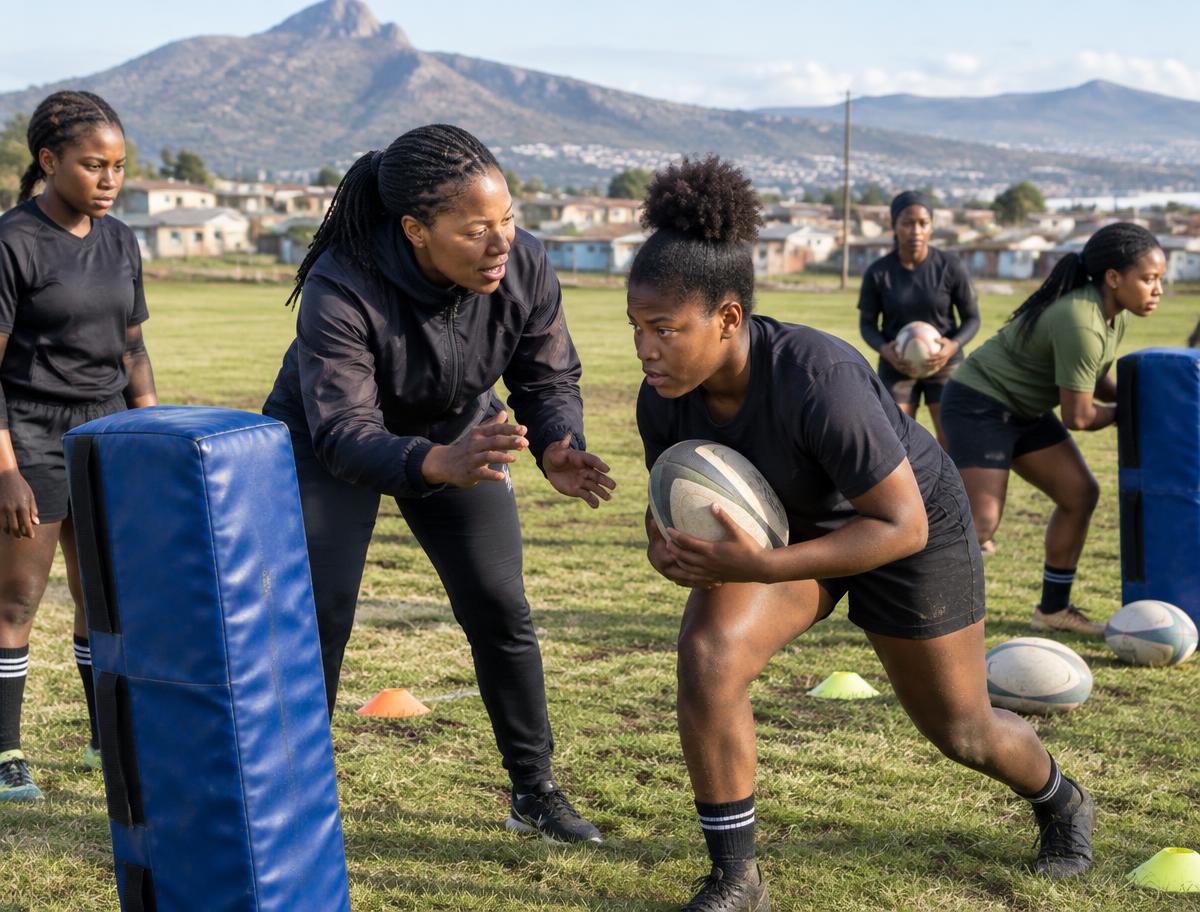
SA Rugby has increasingly invested in age-group opportunities for girls, allowing promising players to enter a more structured high-performance environment at a younger age.
In 2025, SA Rugby held its first national U18 Girls international matches. A group of 53 players from 34 high schools across 12 provincial unions was brought together for an Elite Player Development camp, before the group was reduced to 26 players for the international matches against the Netherlands.
The U20 programme provides another step.
In April 2026, SA Rugby brought together an 18-player U20 women’s group for an alignment camp in Stellenbosch. The players received specialist coaching and were prepared for international matches against the USA U20 team.
These programmes allow selectors to identify and work with players before they become established senior competitors.
Alignment camps connect domestic and international rugby
One of the most important links between domestic rugby and the Springbok Women is the alignment camp.
An alignment camp brings promising players into the national environment without necessarily making them part of the final Test squad.
The players can work with national coaches, experience the standards expected at international level and show how they respond to the demands of the national setup. Coaches, meanwhile, can assess players who may not yet have played Test rugby.
The first Springbok Women alignment camp of 2026 included 34 players, 10 of whom were uncapped. The camp was held in Stellenbosch in April as part of the national team's preparations for the season.
That is an important distinction for new fans to understand.
A player does not necessarily go directly from a provincial final to a Test match. There can be several stages in between, allowing both the player and the coaching staff to assess whether she is ready.
A real example: Nombuyekezo Mdliki
The pathway becomes easier to understand when looking at an individual player.
Nombuyekezo Mdliki is an example of how different parts of the South African system can connect.
She came through age-group rugby, represented the Junior Springbok Women in 2022 and then established herself with Border Ladies at provincial level. Her performances helped attract the attention of the national coaching staff.
Mdliki subsequently made her Springbok Women debut in 2024 and went on to represent South Africa at the 2025 Women’s Rugby World Cup.
Her career does not represent a mandatory route that every player must follow. It does, however, show how age-group rugby, provincial competition and the national setup can connect over the course of a player's development.
The national squad gets a closer look
Eventually, the strongest performers can move from development environments into a Springbok Women squad.
The 2026 Rugby Africa Women's Cup provided a good example. South Africa selected a 28-player squad for the tournament, including nine uncapped players. The team went on to win its fifth consecutive Rugby Africa Women’s Cup title.
For an uncapped player, being selected for a tournament squad is a major step.
She is no longer simply being assessed as a promising provincial player. She is now training and competing alongside established internationals and preparing for the demands of Test rugby.
The presence of new talent can also increase competition for places within the squad, while coaches gain more options when building their team.
Domestic rugby develops more than technical skills
The value of domestic rugby goes beyond teaching players how to pass, tackle or carry the ball.
Competitive rugby teaches players how to prepare for matches, handle pressure, communicate with teammates and make decisions when a game does not go according to plan.
Those qualities become increasingly important at international level.
A provincial season also gives players the opportunity to develop positional understanding. A young forward can learn the details of scrummaging, lineouts, breakdown work and defensive organisation. Backs can develop their kicking, passing, positioning and ability to read space.
At the same time, players learn how to operate within a team structure rather than relying only on individual ability.
That experience can help players prepare for the demands of international rugby.
The pathway is not identical for everyone
It is important not to think of the system as a simple ladder where every player follows exactly the same sequence.
One player might progress through school and provincial rugby before entering a Springbok alignment camp. Another might be identified through an age-group programme. Others may develop through university rugby, Sevens or a combination of different formats.
South Africa's Sevens programme can also provide opportunities for players who possess the speed, fitness and open-field skills required by the shorter format.
The provincial system is therefore better understood as a network of opportunities rather than a single route.
Building a deeper player pool
This matters because South Africa's ambitions have changed.
The Springbok Women remain one of the leading women's 15-a-side teams in Africa and reached the quarter-finals of the 2025 Women's Rugby World Cup for the first time in their history.
To compete more consistently with the world's strongest teams, South Africa needs more than a talented starting XV.
It needs depth.
A deeper domestic system gives selectors more players to choose from and creates competition for every position.
That is one reason the development of women's rugby cannot be measured only by the results of the Springbok Women. The health of provincial competitions, age-group programmes and development camps is equally important.
Every additional player who receives quality coaching and competitive match experience potentially increases the strength of the national team in the future.
From provincial field to the Springbok jersey
The journey from domestic rugby to the Springbok Women is rarely a single dramatic leap.
It is usually a process.
A player starts by developing her skills at school, club or youth level. She may enter a provincial programme and gain experience against senior opposition. Strong performances can lead to age-group selection, national alignment camps, development squads or wider Springbok squads. Eventually, the player may earn the opportunity to make her Test debut.
The route is different for every player, and not every part of the pathway is equally established across the country.
But the direction is clear.
South Africa is creating more opportunities for girls and women to play competitive rugby, identifying talent earlier and connecting domestic rugby more closely with the national setup.
For supporters, that makes the provincial game worth watching in its own right.
The next Springbok Women may not yet be wearing the green and gold. She could be playing in a provincial jersey, learning her position, competing for a place in the starting XV and waiting for the opportunity to take the next step.
Sources
- SA Rugby — De Bruin applauds Daisies and Pick n Pay WSL 1, 7 April
- 2026.
SA Rugby — Magnificent Isuzu Bulls Daisies make it four in a row, 4 April 2026.
SA Rugby — First Springbok Women alignment camp for 2026 points to the future, 10 April 2026.
SA Rugby — First assembly for talented U20 women’s squad, 13 April 2026.
SA Rugby — Ground-breaking internationals lined up for U18 Girls, 24 November 2025.
SA Rugby — Qolo to lead Springbok Women to Rugby Africa Women’s Cup, 18 May 2026.
SA Rugby — Pick n Pay Women’s Super League 1 official competition page.
SA Rugby — Pick n Pay Women’s Super League 2 official competition page.
SA Rugby — Nombuyekezo Mdliki player profile.