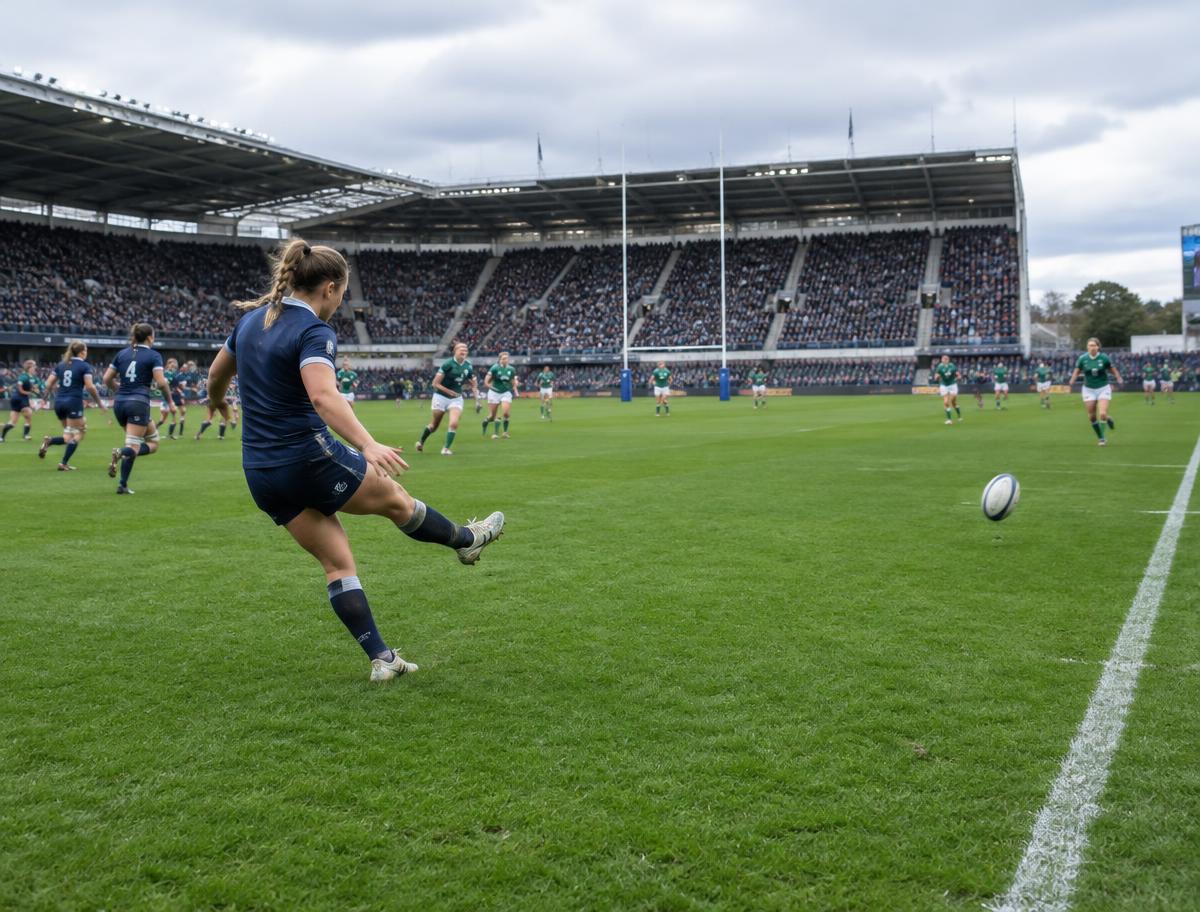
The ball leaves the field after a kick — and the kicking team celebrates. To a new viewer this can look strange: why applaud giving the ball away? With the 50:22 law, the team genuinely gains an advantage: the throw-in at a lineout deep in the opposition's territory.
What 50:22 means
The basic scenario is this: a player kicks from inside her own half and the ball goes into touch indirectly inside the opposition's 22-metre area. If the other conditions are met, the kicking team throws in at the resulting lineout.
"Indirectly" means this is not an ordinary kick where the ball flies straight over the touchline. A typical example is a ball that first bounces in the field of play and then rolls into touch. The point where it goes out matters: it must be inside the opposition's 22.
Picture it: a player receives the ball in her own half, spots open space near the far touchline and kicks there. The ball lands, keeps rolling and leaves the field close to the opposition try line. If the conditions of the law are met, her team does not just gain territory — it wins its own throw-in.
Why you cannot simply go back and kick
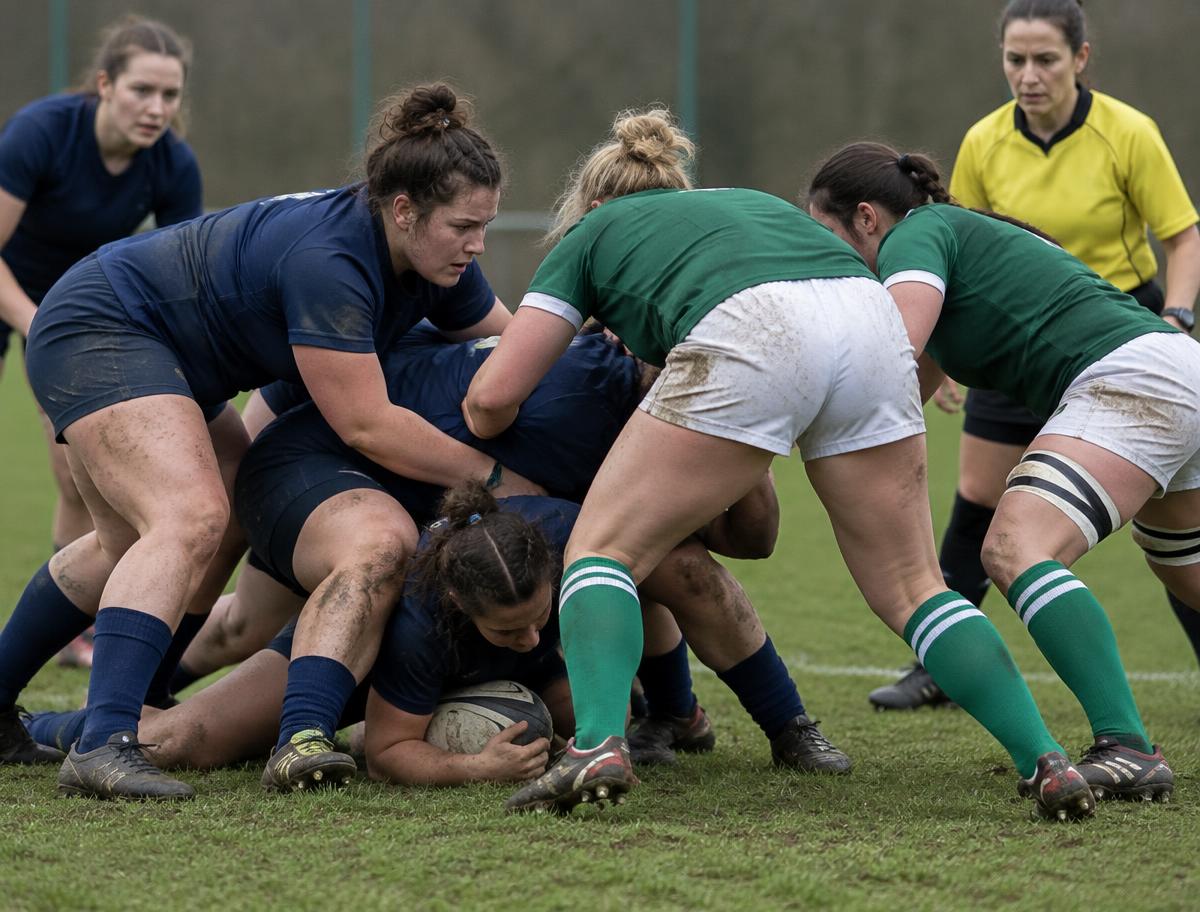
The law prevents teams from artificially creating the situation. If a team took the ball back into its own half itself, a tackle, ruck or maul must take place there, or an opponent must touch the ball, before 50:22 can apply. Kick-offs and other restart kicks are not covered.
It is an important detail: a well-directed kick is not enough on its own. Referees also judge how the ball reached the starting area.
How the law changes defence
World Rugby explained the introduction of 50:22 as a way to create space for attack. Defences have to account for the threat of a long kick and keep players deeper. In theory, that reduces the number of defenders in the front line and opens more opportunities for running rugby.
The result is a tactical choice. A dense line can make progress through passing difficult but leave space behind the defenders. A deeper set-up protects better against the kick but may give the attack more freedom in front of the line.
For viewers, it is a good reason to occasionally look away from the ball towards the far side of the field: a decision to kick may be explained by the position of defenders who barely appear in the main TV shot.
Not every good kick is a 50:22
Kicking has other purposes too. A kick can put the ball into open space, create a chance for a wing or move the contest away from a team's own try line. Even giving possession to the opposition can sometimes come with a favourable territorial exchange.
It is also worth distinguishing 50:22 from kicking a penalty into touch: after a penalty, the throw-in is kept for a different reason. And in both cases, having your own lineout is not the same as guaranteed possession — the ball still has to be won.
When judging a kick, it is more useful to ask not "why did the team give the ball away?" but "what situation did it create with the next action?" That question turns an exchange of kicks from an apparent pause into an understandable tactical contest.