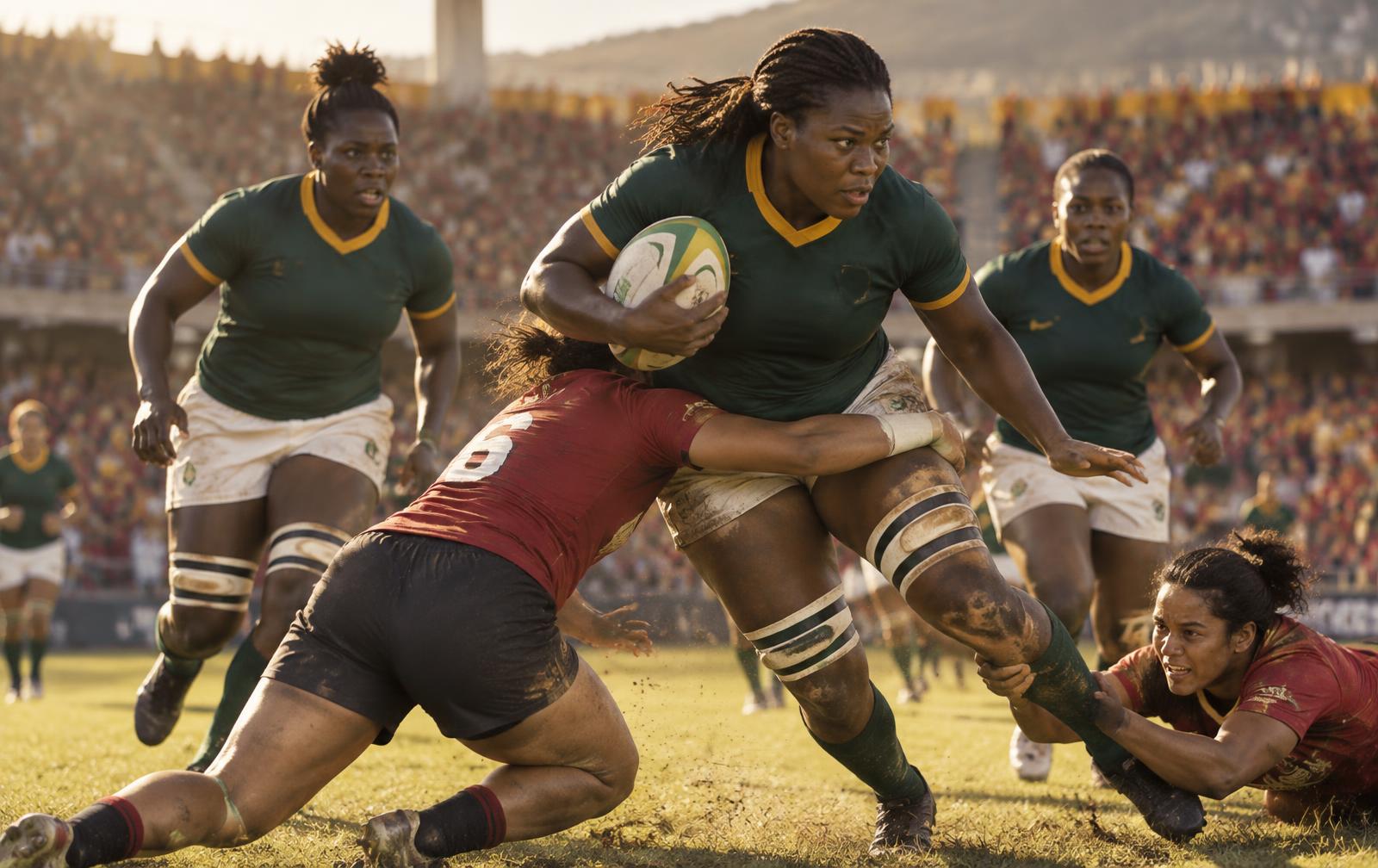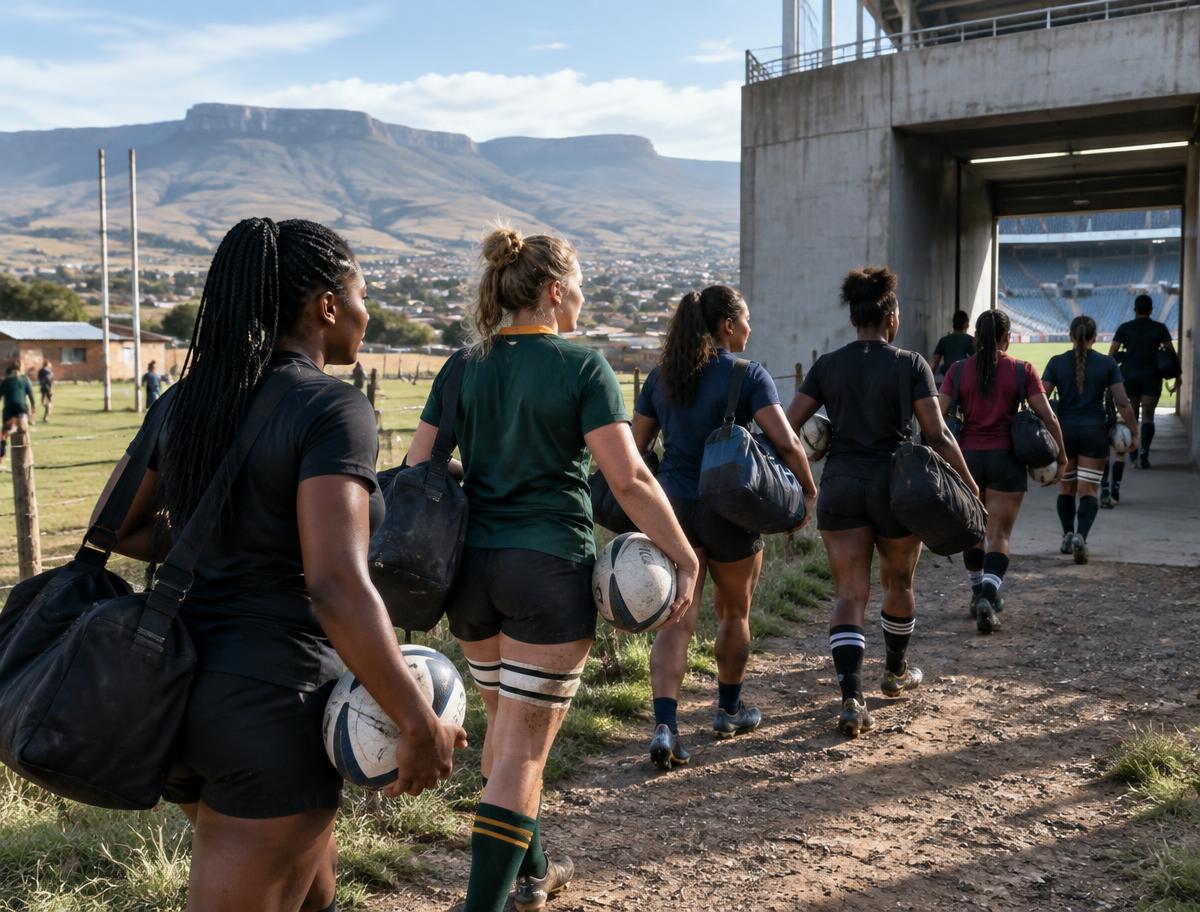
The road to the Springbok Women
Making the Springbok Women is not simply a matter of being selected from a provincial team. For many players, the journey takes place across several levels of South Africa’s rugby system, with opportunities to develop, compete and attract the attention of national selectors along the way.
South African Rugby Union (SA Rugby) has been working to create a clearer pathway for women and girls, linking grassroots participation with schools, clubs, universities, provincial competitions and national teams. The objective is to identify talented players earlier and give them opportunities to progress towards high-performance rugby.
The exact route differs from player to player. Some reach the national team through provincial rugby, while others emerge through age-group programmes, Sevens rugby or university competitions. What connects these routes is regular high-level competition and exposure to national coaches and talent identification programmes.
It starts at school and youth level
For many future players, organised rugby begins at school.
SA Rugby has identified schools as one of the most important foundations for growing the women’s game. Its development programmes include FNB Girls’ Weeks, Elite Player Development (EPD) camps and age-group activities designed to give young players opportunities that were historically less available to girls than to boys.
The pathway has expanded rapidly in recent years. In 2025, SA Rugby held its first national U18 Girls international matches, with players selected after FNB U18 Girls’ Weeks and an Elite Player Development camp. The programme brought together players from 34 high schools across 12 provincial unions.
The next step is not necessarily the senior Springbok Women. Young players can move into age-group, university, provincial or Sevens rugby while continuing their development.
In 2026, SA Rugby also assembled an Under-20 women’s group for an alignment camp in Stellenbosch. The 18-player group received specialist coaching within the national set-up and was prepared for international fixtures against USA U20 later in the year.
These programmes are important because they give selectors an opportunity to evaluate players before they enter senior provincial rugby.
Provincial rugby is a major testing ground
For players moving into senior rugby, provincial competition is one of the most important stages of the pathway.
In 2026, South Africa’s top provincial women's competition was renamed the Pick n Pay Women's Super League 1. The competition featured eight teams, with the Isuzu Bulls Daisies, DHL Western Province, Sanlam Boland Dames, Border Ladies, Golden Lions Women, EP Queens, Sharks Women and Free State Women among the leading provincial sides.
The competition provides something that training camps cannot replicate: regular, competitive matches.
Players have the chance to establish themselves in their positions, develop their tactical understanding and demonstrate that they can perform consistently against strong opposition. National coaches can also watch players in a competitive environment rather than relying only on training performances.
That connection works both ways. During the 2026 season, Springbok Women head coach Swys de Bruin praised the provincial competition for giving the national coaching staff valuable insight and helping uncover new talent.
The importance of the provincial game is also reflected in the performance of the Bulls Daisies. In April 2026, they defeated the Sanlam Boland Dames 36-15 to win the Women's Super League 1 title for the fourth consecutive year.
From provincial rugby to national camps
Playing well for a province does not automatically result in a Springbok call-up. Instead, promising players may first enter national alignment camps.
These camps allow the national coaching staff to assess potential international players, introduce them to the team's systems and expose them to the physical and tactical demands of Test rugby.
The 2026 season provides a good example. For the first Springbok Women alignment camp of the year, de Bruin selected 34 players, including 10 uncapped players. The camp took place in Stellenbosch in April and was specifically designed to look towards the future of the national team.
This means a provincial player does not have to wait until she is already an established international to enter the national environment. Alignment camps can be the first major step into the Springbok system.
The SA Women 'A' team: a bridge to test rugby
Another important part of the modern pathway is the South Africa Women 'A' team.
The concept gives players experience at international level without immediately placing them into a full Test programme. In August 2026, the SA Women 'A' squad travelled to Brazil for a two-match tour. The squad included nine capped Springbok Women alongside developing players. SA Rugby described the purpose of the programme as exposing players to high-level rugby and building experience.
This makes the 'A' team an important bridge between domestic rugby and Test rugby.
For an uncapped player, an international tour can provide experience of travelling, preparing for an opponent, dealing with unfamiliar conditions and playing in a national-team environment. It also gives coaches another opportunity to assess players before they make the step up to the Springbok Women.
There is more than one route
The pathway is not identical for every player.
Vainah Ubisi, for example, came through the Junior Women's set-up before making her Springbok Women debut in 2023. She established herself with the Bulls Daisies and became one of South Africa's emerging forwards.
Faith Tshauke followed a different route. She was identified through the Blue Bulls Youth Training Centre programme, represented SA Students Sevens and later became a regular for the Bulls Daisies. After helping the Daisies win four consecutive provincial titles from 2023 to 2026, she made her Test debut for South Africa in 2025.
And the connection between provincial rugby and the national Sevens programme is also significant. In April 2026, Zintle Mpupha and Eloise Webb were recalled to the Springbok Women’s Sevens squad after playing in the Women's Super League 1 final for the Bulls Daisies and Boland Dames respectively.
These examples show why there is no single formula for reaching the national team.
What does it take to make the final step?
Ultimately, selection for the Springbok Women comes down to performance, potential and the needs of the national team.
A player needs to demonstrate that she can compete at the required physical and technical level, understand the team's tactical demands and perform consistently. National camps then give coaches the chance to assess how a player adapts to the higher standard.
The process is also becoming more deliberate. In May 2026, the Springbok Women selected a 28-player squad for the Rugby Africa Women's Cup, including nine uncapped players.
That illustrates the opportunity available to players coming through the pathway: earning a place in the national environment is only the beginning. The next challenge is competing for a position and eventually earning a Test cap.
A pathway still being built
South Africa's women's rugby pathway is developing rapidly. SA Rugby has acknowledged the need to create more opportunities at age-group level and establish a sustainable system connecting grassroots rugby with provincial and national teams.
For an aspiring player, that means there are increasingly more doors through which she can enter the system.
School and youth rugby can lead to age-group programmes. Clubs, universities and provincial teams provide opportunities to develop as a senior player. Provincial competitions offer regular high-level matches. Alignment camps introduce promising players to the national environment, while the SA Women 'A' team can provide an additional bridge towards Test rugby.
Not every player follows every step. But the direction is clear: South Africa is building a wider and more connected pathway designed to give talented women more opportunities to progress — and ultimately to give the Springbok Women a deeper pool of players from which to build the next generation of the national team.
Sources
- SA Rugby — Springbok Women official team page and pathway information.
SA Rugby — First Springbok Women alignment camp for 2026 points to the future.
SA Rugby — Huge boost for women's rugby as new WSL kicks off.
SA Rugby — De Bruin applauds Daisies and Pick n Pay WSL 1.
SA Rugby — First assembly for talented U20 women’s squad.
SA Rugby — Ground-breaking internationals for U18 Girls.
SA Rugby — Bok Women Academy in full swing as Brazil tour looms.
SA Rugby — player profiles for Vainah Ubisi and Faith Tshauke.